

Forests are often discussed as carbon sinks. But their role in regulating water cycles, rainfall and planetary cooling may be even more important. WeForest founder Marie-Noëlle Keijzer explains why restoring forests is not only about reducing emissions — it is about stabilising the climate system itself.
Beyond Carbon: Reframing the Climate Debate
On the occasion of World Environment Day on 5 June, attention once again turns to the urgent need to protect and restore natural ecosystems. While climate discussions are often dominated by carbon emissions and net-zero targets, forests may play a far broader role in stabilising the planet that is commonly understood.
Marie-Noëlle Keijzer, founder of the international NGO WeForest, argues that this focus risks overlooking another critical dimension of climate stability: the water cycle.
Climate extremes are caused by the imbalance in a water cycle, not just the carbon cycle
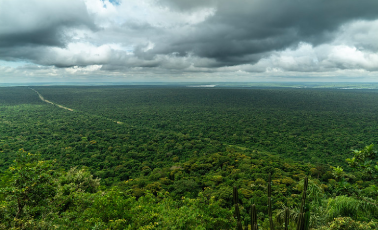
The statement challenges one of the most common assumptions in climate discourse. Forests are widely recognised as powerful carbon sinks, capable of absorbing and storing CO₂ over decades. But their influence extends far beyond carbon sequestration. Forests regulate rainfall, generate atmospheric moisture, cool local and regional climates, stabilise soils and support biodiversity. In other words, they function as natural climate infrastructure.
Forests Regulate the Planet’s Water Cycle
Forests influence the planet through evapotranspiration — the process by which trees release water vapour into the atmosphere. That moisture contributes to cloud formation and rainfall, helping to maintain healthy watersheds and regional climate stability. Forests also play a role in what scientists call the “biotic pump”: drawing humid air from oceans inland and sustaining rainfall patterns over large continental areas.
These processes are becoming increasingly relevant as climate change intensifies extreme weather events. Europe is already approximately 2.4°C warmer than pre-industrial levels[1], and warmer air holds more water vapour. Every additional degree Celsius allows the atmosphere to retain roughly 7% more moisture[1]. The consequence is not simply “more rain,” but more volatile and destructive precipitation patterns.
Recent disasters illustrate this dynamic. In 2024, Valencia experienced catastrophic flooding after receiving the equivalent of a year’s rainfall within hours. A few weeks later in early 2025, Los Angeles suffered devastating fires after alternating periods of excessive rain and prolonged drought created large volumes of dry vegetation that became fuel for wildfires.
The implication is profound: restoring forests is not only a long-term carbon strategy, but also a near-term cooling and resilience mechanism.
WeForest: Restoring Ecosystems Through Communities
This perspective is central to the work of WeForest, a Belgium-based non-profit organisation founded in 2010 by Bill Liao and Marie-Noëlle Keijzer. The organisation focuses on large-scale forest landscape restoration in tropical regions, working closely with local communities, governments and scientific institutions. Its mission is to restore and conserve forests while maximising benefits for people, nature and climate. To date, WeForest reports having grown more than 110 million trees and restored over 83,000 hectares of forest landscapes across Africa, South America and Asia.
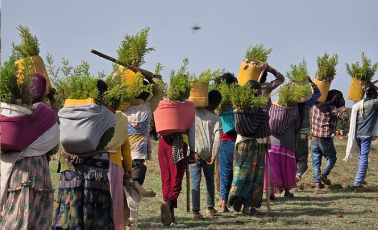
Importantly, the organisation insists that restoration cannot succeed without addressing local livelihoods. “You cannot restore and protect forests without involving the people who live around them,” Keijzer noted — a philosophy that contributed to WeForest receiving the Mother Teresa Prize for Social Justice in 2021.
This community-centred approach is visible across its projects. In Zambia, WeForest supports alternative income streams such as beekeeping, poultry farming and agroforestry to reduce dependence on illegal logging and charcoal production. In Senegal, mangrove restoration projects are helping fishing communities recover ecosystems that protect coastlines, stabilise soils and allow fish populations to return.
Mangroves are particularly significant because of their exceptional capacity to store “blue carbon.” According to WeForest, mangrove ecosystems can sequester up to four times more carbon than terrestrial forests.
Forests as Climate Infrastructure
A shift is emerging in climate science. According to UNDP, forests are often described as representing roughly 30% of the climate solution[2]. However, this figure may significantly underestimate their true contribution because the cooling effects of water-cycle regulation are still insufficiently integrated into climate models. Some recent scientific work now points to a potentially much larger role for forests in stabilising the climate system.
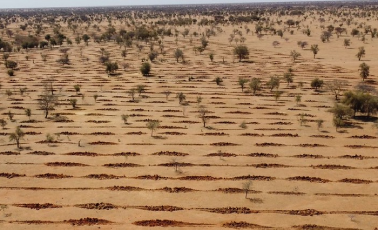
That perspective introduces an important note of optimism into an otherwise alarming climate outlook. While the world continues to lose forests at an unsustainable pace, restoration remains technically and economically achievable. WeForest estimates that the cost of restoring vast degraded tropical landscapes is modest compared with the growing financial burden of climate-related disasters.
The challenge, therefore, is not whether solutions exist. It is whether governments, businesses and investors are willing to scale them quickly enough.
If forests are indeed fundamental regulators of both carbon and water cycles, then protecting and restoring them is no longer simply an environmental initiative. It is a strategic investment in climate resilience, economic stability and human security. And as the impacts of climate disruption become increasingly visible, forests may prove to be among the most valuable infrastructure assets the planet still possesses.
Candriam’s Impact: Close to 1,000 hectares restored
Candriam has been supporting WeForest since 2021 through the Candriam Institute for Sustainable Development, contributing to several restoration projects including the Casamance mangrove programme in Senegal and the Katanino forest reserve in Zambia.
Since 2023, the partnership has helped restore more than 1,000 hectares of ecosystems while supporting agroforestry, conservation agriculture and beekeeping initiatives designed to provide sustainable livelihoods for local communities.
- In Zambia, 560 hectares of restored forest are equivalent to more than 630,000 trees, helping regenerate degraded miombo woodland ecosystems while reducing pressure from illegal logging and charcoal production.
- In Senegal, the restoration of 523 hectares of mangroves is expected to sequester nearly 26,000 tonnes of CO₂ while helping rebuild fragile coastal ecosystems and supporting fishing communities whose livelihoods depend on healthy mangrove habitats.
[1]European State of the Climate Report 2025, published by Copernicus EU (https://climate.copernicus.eu/esotc/2025)
[2]https://climatepromise.undp.org/news-and-stories/forests-can-help-us-limit-climate-change-here-how